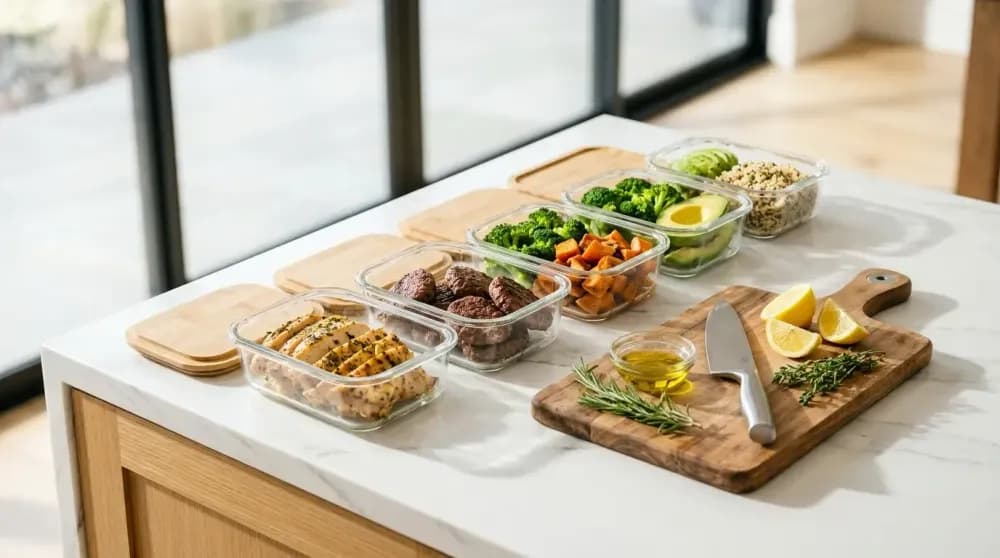
Executing a high-protein meal prep routine eliminates daily guesswork, controls dietary adherence, and ensures your muscles receive the amino acids required for tissue repair. Most people fail their body composition goals during busy weekdays when hunger strikes and convenience food replaces structured nutrition. Preparing 4 to 5 days of protein-focused meals in a single 90-minute kitchen session establishes complete control over your daily caloric balance and macronutrient splits. Whether your goal is adding lean muscle mass or stripping away stubborn body fat, systematic batch cooking turns nutritional science into an effortless daily habit.
Protein distribution and the leucine threshold across daily meals
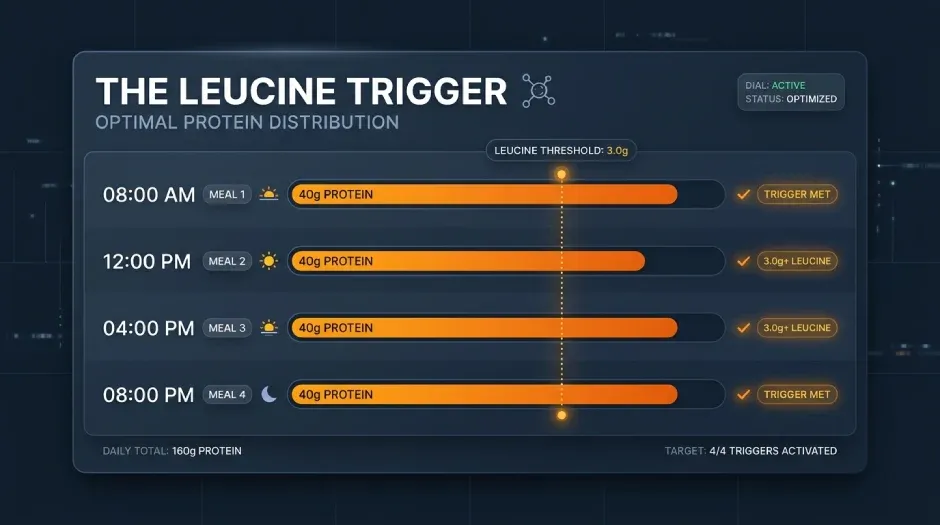
Building muscle tissue and preserving lean mass during a caloric deficit depends on triggering muscle protein synthesis multiple times throughout the day. Skeletal muscle requires an adequate dose of essential amino acids, particularly leucine, to activate the mammalian target of rapamycin (mTOR) pathway. Eating a single massive protein meal at dinner while skimping on breakfast and lunch fails to optimize this muscle-building trigger.
In a comprehensive analysis published in the Journal of the International Society of Sports Nutrition (
Schoenfeld & Aragon, 2018), researchers determined that maximizing anabolism requires distributing protein evenly. The authors recommend consuming between 0.40 and 0.55 grams of protein per kilogram of body weight per meal, divided across 4 to 5 feeding opportunities. For an 80-kilogram individual, this equates to 32 to 44 grams of high-quality protein in each meal container.
Total daily intake remains the foundational layer of muscular development. A systematic review and meta-analysis published in the British Journal of Sports Medicine (
Morton et al., 2018) evaluated 49 studies with 1,863 participants. The researchers concluded that total protein intakes up to 1.62 grams per kilogram per day optimize resistance-training adaptations, with the 95% confidence interval reaching up to 2.2 grams per kilogram. You can calculate your exact daily targets and macronutrient ratios with the
FitWay Macro Splitter Calculator. Structuring your meal prep around these numbers ensures every prep container delivers the physiological threshold necessary to support muscle remodeling.
Adjusting calorie and macro targets for muscle gain versus fat loss
Meal prep is versatile. The same whole-food protein foundations, such as grilled chicken breast, 93% lean ground turkey, extra-lean flank steak, or baked tofu, serve both fat loss and muscle hypertrophy protocols. The primary difference lies in how you scale your starchy carbohydrates and dietary fats across each container.
When your goal is dropping body fat while protecting metabolically active muscle, protein requirements rise. Caloric restriction increases the risk of muscle catabolism. In a randomized controlled trial published in The American Journal of Clinical Nutrition (
Longland et al., 2016), researchers put 40 young men into a 40% caloric deficit combined with heavy resistance training and interval exercise. The group consuming 2.4 grams of protein per kilogram gained lean body mass while losing 4.8 kilograms of fat over 4 weeks, significantly outperforming the standard 1.2 grams per kilogram group.
To set your baseline energy intake accurately for fat loss or lean bulking, use the
FitWay Daily Calorie & TDEE Calculator. Pair this nutritional discipline with a structured lifting routine, such as our
Full Body Strength Compound Barbell Routine or our
Beginner Home Bodyweight Workout. For fat loss, keep carbohydrates to moderate volumes of fiber-rich sweet potatoes, quinoa, and green vegetables. For muscle growth, increase rice, oats, and healthy fat portions to create a modest 250 to 400 calorie surplus.
5-day high-protein batch meal plan and macro breakdown
This 5-day plan focuses on two primary protein staples cooked in bulk: herb-seasoned chicken breast and lean grass-fed beef or 93% lean turkey patties. These recipes yield five complete midday or evening meals designed for balanced satiety, stable blood glucose, and reliable micronutrient density.
| Day & Meal | Primary Protein Source | Complex Carbohydrate & Fiber | Healthy Fat Source | Protein (g) | Est. Calories |
|---|
| Monday: Herb Grilled Chicken Box | 200g Grilled Chicken Breast | 150g Roasted Sweet Potato, 100g Steamed Broccoli | 10ml Extra Virgin Olive Oil | 46g | 480 kcal |
| Tuesday: Chipotle Beef & Quinoa Bowl | 180g 93% Lean Ground Beef | 140g Cooked Quinoa, 80g Black Beans, Salsa | 30g Fresh Avocado | 44g | 520 kcal |
| Wednesday: Herb Grilled Chicken Box | 200g Grilled Chicken Breast | 150g Roasted Sweet Potato, 100g Asparagus | 10ml Extra Virgin Olive Oil | 46g | 475 kcal |
| Thursday: Chipotle Beef & Quinoa Bowl | 180g 93% Lean Ground Beef | 140g Cooked Quinoa, 80g Black Beans, Peppers | 30g Fresh Avocado | 44g | 525 kcal |
| Friday: Lemon Garlic Turkey Patties | 200g 93% Lean Ground Turkey | 150g Brown Jasmine Rice, 100g Zucchini | 15g Crumbled Feta Cheese | 42g | 510 kcal |
Each meal delivers 42 to 46 grams of complete protein, exceeding the leucine threshold for most body weights. If you require higher calories for an active mass-gain phase, double the carbohydrate portions by adding another 100 grams of rice or sweet potatoes. If your focus is aggressive fat cutting, swap 50 grams of complex carbohydrates for additional low-calorie fibrous vegetables such as cauliflower rice or green beans.
Food safety, storage rules, and container selection
Nutritional preparation requires food safety awareness. Cooking several pounds of animal protein at once means following strict cold storage guidelines to prevent bacterial proliferation and foodborne illness. Pathogens such as Salmonella and Campylobacter multiply in the temperature danger zone between 40°F and 140°F (4°C and 60°C).
The United States Department of Agriculture guidelines specify that cooked poultry, beef, and pork remain safe in a standard refrigerator set at or below 40°F (4°C) for a maximum of 3 to 4 days. If you prep on Sunday afternoon, meals intended for Thursday and Friday should go directly into the freezer once chilled.
| Protein & Food Category | Refrigerator Limit at 40°F (4°C) | Freezer Limit at 0°F (-18°C) | Safe Minimum Internal Temp |
|---|
| Cooked Chicken Breast & Turkey | 3 to 4 Days | 3 to 4 Months | Reheat to 165°F (74°C) |
| Cooked Ground Beef & Flank Steak | 3 to 4 Days | 2 to 3 Months | Reheat to 165°F (74°C) |
| Cooked Salmon & Whitefish | 2 to 3 Days | 1 to 2 Months | Reheat to 165°F (74°C) |
| Hard-Boiled Eggs (In Shell) | 7 Days | Do Not Freeze | Serve Chilled |
| Cooked Brown Rice & Quinoa | 4 to 5 Days | 4 to 6 Months | Reheat to 165°F (74°C) |
Select high-grade borosilicate glass meal prep containers with airtight locking lids. Thin plastic containers degrade quickly, retain greasy odors, and can leach plasticizers during microwave reheating. When reheating in the office or at home, leave the lid loosely unlatched and add one tablespoon of water to steam the rice and poultry, preventing dryness.
The 90-minute Sunday prep workflow
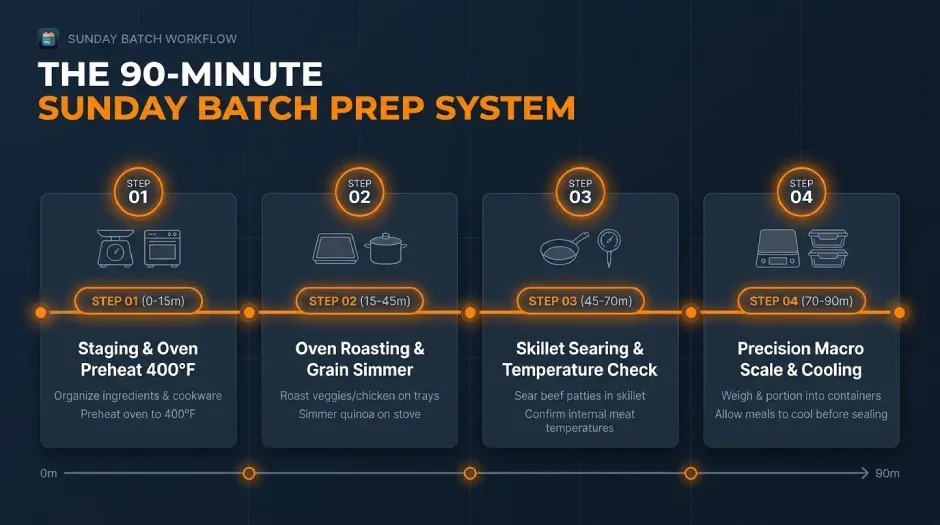
Kitchen efficiency comes down to parallel processing. Spending three hours cooking dishes one by one causes prep burnout. Executing an organized sequence lets you prepare five days of balanced fuel in ninety minutes.
- Clean your counter space, wash your cutting boards, and preheat your oven to 400°F (200°C).
- Weigh and rinse your grains in a fine-mesh strainer. Start your rice cooker or stovetop pot with quinoa or brown jasmine rice.
- Chop two sweet potatoes into uniform half-inch cubes. Trim one pound of fresh broccoli florets. Toss both on a large baking sheet with olive oil, salt, garlic powder, and black pepper.
- Place the vegetable sheet in the preheated oven for 25 to 30 minutes.
- Season two pounds of boneless skinless chicken breasts and form one pound of lean ground beef into uniform patties.
- Heat a large cast-iron skillet or grill pan over medium-high heat. Sear your meat in two consecutive batches, cooking chicken to an internal temperature of 165°F and beef patties to 160°F.
- Set out five glass containers on your counter. Place an electronic food scale next to your hot pans.
- Portion your grains, vegetables, and proteins evenly into each dish according to your target macro numbers.
- Allow containers to sit uncovered for 20 minutes until room temperature before sealing lids, avoiding condensation that causes soggy textures.
- Place Monday through Wednesday meals in the primary refrigerator shelf. Transfer Thursday and Friday containers into the freezer.
Review our dedicated
Nutrition guide hub for additional dietary frameworks and supplement timing strategies that align with your lifestyle.
Conclusion
High-protein meal prep eliminates daily friction and provides consistent physiological support for both muscle building and fat loss. Batch cooking quality proteins, complex carbohydrates, and fiber-rich vegetables puts you in command of your daily macronutrient targets.
Dedicate 90 minutes each weekend to grocery shopping and batch cooking. Store your meals in airtight glass containers, observe standard refrigeration timelines, and track your daily nutrition with our online calculators. Consistency in the kitchen creates the physiological environment your body needs to transform strength training into visible physique progress.
Frequently Asked Questions
Can you freeze cooked chicken and rice meal prep without ruining the texture?
Yes, cooked chicken breast and rice freeze and thaw well if handled correctly. Cool the cooked poultry and grains completely to room temperature before snapping the airtight lid shut. Rapid cooling prevents internal steam condensation from creating ice crystals that make thawed chicken stringy and rice mushy. When ready to eat, transfer the container from the freezer to the refrigerator 24 hours prior to consume it. Reheat with a damp paper towel draped over the container to restore moisture.
How do you hit high protein targets on meal prep without overeating fat?
Hitting high daily protein goals while maintaining moderate fat targets requires selecting lean whole-food sources. Focus your bulk cooking on skinless chicken breast, 93% to 96% lean ground beef or turkey, pork tenderloin, egg whites, and wild-caught cod or tuna. Measure cooking oils with a tablespoon before pouring. Each tablespoon of olive or avocado oil adds 14 grams of pure fat and roughly 120 calories to your daily total.
Does microwaving meal prep degrade the protein quality of cooked meat?
Microwaving does not degrade the protein quality or amino acid integrity of cooked meat. Microwaves heat food by exciting water molecules within the meal, which produces heat through friction. The thermal exposure during microwave reheating is short and comparable to stovetop or conventional oven heating. Denaturation of protein occurs during any heating process, but the peptide bonds holding the essential amino acids together remain intact, allowing your digestive system to absorb the amino acids for muscle repair.