Exercise Science & Workout Programming Guide
Discover the fundamentals of exercise science and workout programming designed to build balanced strength, enhance movement efficiency, and prevent training plateaus. FitWay certified trainers and strength coaches break down biomechanics, progressive overload principles, and volume periodization into practical routines. Whether designing your first gym routine or refining complex athletic splits, find evidence-based guidance for consistent long-term progression.

Bodyweight Training vs Weight Training: Which Builds More Muscle
Bodyweight vs weight training: which builds more muscle? Research shows both work when effort is matched. Here is how to choose based on your goals.

Best Exercises to Build a Stronger Back: A Complete Training Guide
Build a stronger back with the best exercises for lats, traps, and erectors. Includes training structure, technique tips, and common mistakes to avoid.

Cardio vs Strength Training: Which Is Better for Weight Loss
Cardio or strength training for weight loss? Research shows combining both produces better fat loss and body composition than either alone.

The Best Full Body Workout for Beginners You Can Do at Home
A complete beginner full body workout you can do at home with no equipment. Build strength and fitness in 3 sessions per week with clear progressions.

Progressive Overload with Dumbbells: How to Build Muscle with Limited Weights
Learn how to achieve progressive overload with dumbbells using the double progression method, tempo control, and volume expansion with limited weights.
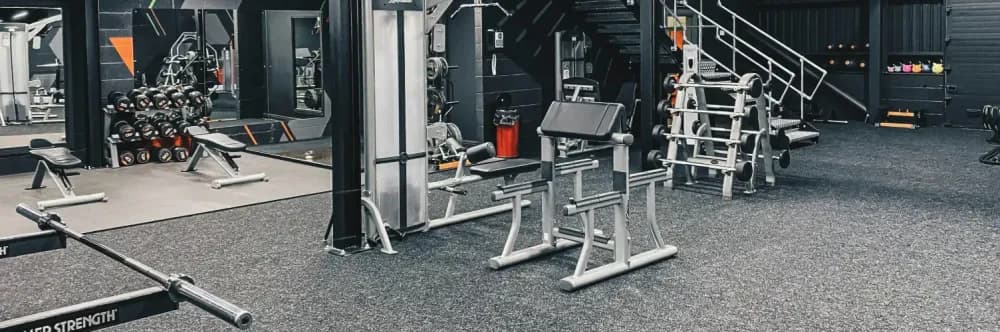
How to Start Working Out: A Step-by-Step Guide for Beginners
New to fitness? This step-by-step beginner guide covers how to start working out: goal setting, basic programs, nutrition, and building a habit.
Foundational Principles of Exercise Science
Effective workout programming transforms arbitrary physical effort into predictable physiological adaptations. Rather than training to random exhaustion, structured routines rely on biomechanical efficiency, movement plane balance, and neuromuscular coordination to produce lasting physical changes without excessive injury risk.
Movement Patterns and Exercise Selection
A comprehensive strength regimen centers around fundamental human movement patterns: squatting, hip hinging, horizontal pushing and pulling, vertical pressing and pulling, and core stabilization. For individuals establishing their first gym routine, start with our complete guide on how to start working out, or build confidence at home through our best full-body beginner home workout.
Athletes training with minimal equipment can build strong functional foundations with calisthenics by following our beginner bodyweight routine or structured intermediate bodyweight circuits.
Managing Volume, Intensity, and Progressive Load
Training volume (weekly sets per muscle group) and intensity (load relative to maximal capacity) dictate recovery needs and neuromuscular adaptations. To program resistance safely, utilize the FitWay One-Rep Max Calculator to determine precise working loads without testing maximal singles to failure. You can explore our complete suite of calculation engines in the FitWay interactive fitness tools hub.
Understanding load progression is critical: review how to systematically increase stimuli in our guide to progressive overload principles. Lifters targeting gym-based strength development can transition into our dedicated Gym Foundation routine.
Choosing Your Training Direction
Align your programming structure with your primary physical objective:
- For focused muscular hypertrophy, volume periodization, and training splits, visit our Muscle Building category hub.
- For recovery protocols, sleep hygiene, and joint mobility, explore our Lifestyle category guides.
Frequently Asked Questions
How many days per week should I train?
For the majority of trainees, 3 to 4 resistance training sessions per week provide an optimal balance of training stimulus and recovery. Full-body routines performed 3 times weekly or upper-lower splits performed 4 times weekly are both scientifically supported formats.
How long should a typical workout session last?
An effective resistance training session typically lasts 45 to 65 minutes, excluding a dynamic warmup. Extending workouts beyond 75 minutes often leads to diminishing neuromuscular returns and elevated central fatigue.
What is the ideal rest interval between sets?
Rest 2 to 3 minutes between heavy compound movements (like squats, deadlifts, and presses) to allow full adenosine triphosphate (ATP) resynthesis. For isolation exercises, 60 to 90 seconds of rest is generally sufficient to maintain intensity while managing fatigue.
How often should I change my workout routine?
A well-designed workout program should be followed for 8 to 12 weeks before major modifications. Constantly changing exercises every week prevents neuromuscular adaptation and makes tracking progressive overload nearly impossible.