Intermediate Lower Body Hypertrophy: Quads, Glutes & Hamstrings
A comprehensive 50-minute lower body hypertrophy session engineered to build quad thickness, hamstring density, and powerful glutes. This intermediate routine combines heavy knee-dominant compound loading, hip-hinge mechanics, and targeted isolation exercises. Structured around proven progressive overload principles to maximize muscular tension and lower body development.
Exercise List (6)
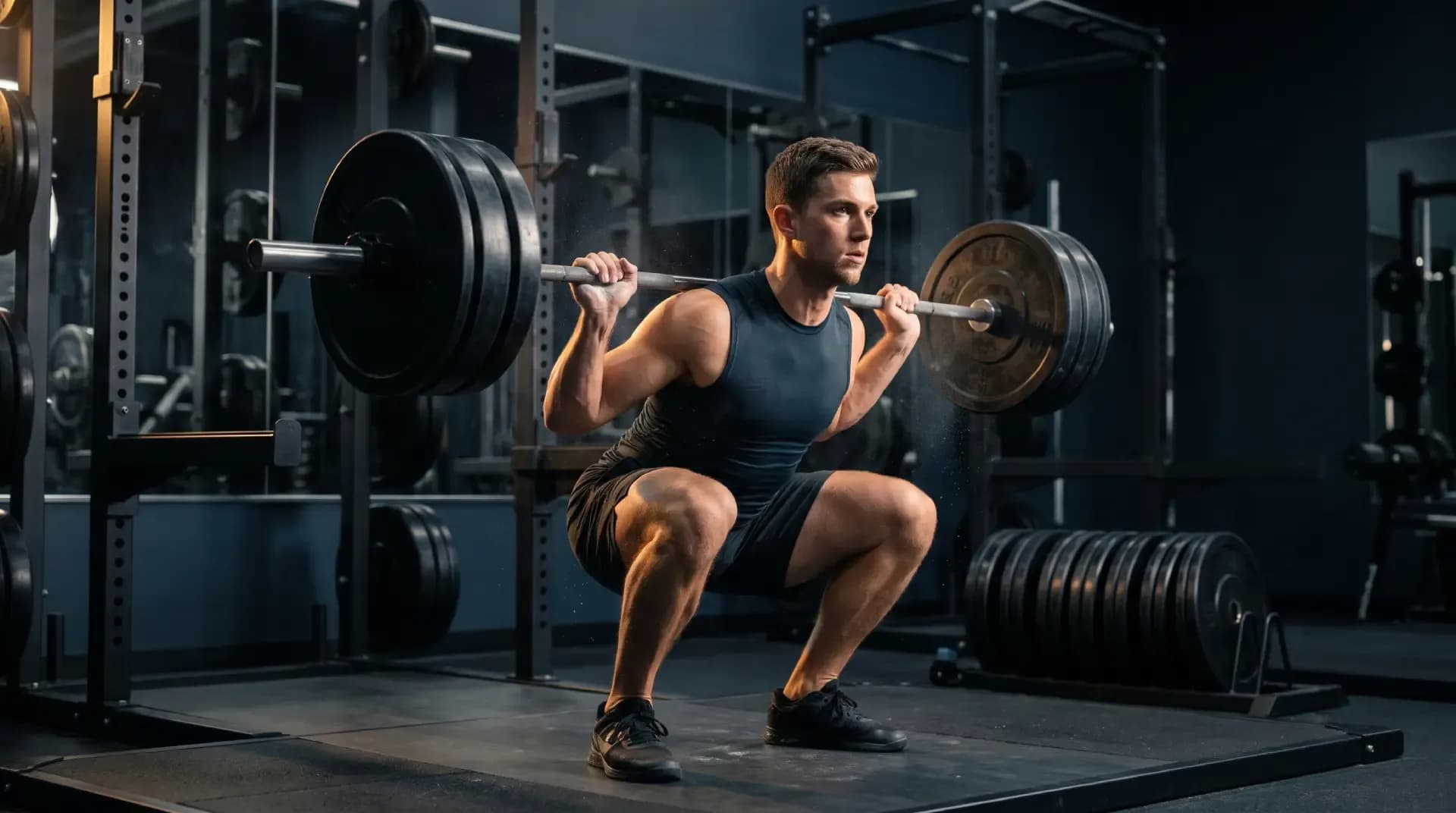
Barbell Back Squat
4 Sets • 6-8
No animation available
Form Preview
Execution Technique
"Approach the barbell in the squat rack, stepping under the bar and resting it firmly across your upper trapezius. Grip the bar slightly wider than shoulder-width, pulling your elbows down to create upper back tightness. Unrack the bar by extending your knees and hips, then take two measured steps back into your lifting stance with feet shoulder-width apart and toes angled slightly outward at 15 to 30 degrees. Inhale deeply into your abdomen, expanding your ribcage and bracing your core 360 degrees as if preparing for impact. Initiate the descent by simultaneously breaking at the hips and knees, sitting down between your thighs while keeping your chest proud and spine neutral. Descend under control until your hip crease drops just below the top of your patella. Pause momentarily in the hole without bouncing, then drive violently through the midfoot, extending knees and hips simultaneously until standing tall. Exhale forcefully through pursed lips as you pass the sticking point."
Pro Tips
Rest 2 to 3 minutes between sets. Keep your chest upright and maintain forward gaze at a fixed point on the floor four to six feet ahead to reinforce a neutral cervical spine.
Avoid
Allowing the hips to shoot up faster than the chest on the ascent (good-morning squat) or letting the knees cave inward during the turnaround.
Barbell Romanian Deadlift
3 Sets • 8-10
Dumbbell Bulgarian Split Squat
3 Sets • 10-12 per leg
Seated Leg Curl
3 Sets • 10-12
Leg Extension Machine
3 Sets • 12-15
Standing Dumbbell Calf Raise
4 Sets • 12-15
Nutrition & Fueling Tips
Pre-Workout Fuel
Consume a carbohydrate-dense, moderate-protein meal 90 minutes before lifting, such as 60g of rolled oats paired with a scoop of whey protein and a sliced banana. High-intensity lower body training requires abundant intramuscular glycogen, so avoid heavy fats or slow-digesting fibrous foods that may cause gastric fullness during deep squats.
Post-Workout Recovery
Within 45 to 60 minutes after your final set, consume 35 to 45g of high-leucine protein paired with 60 to 80g of fast-acting carbohydrates (such as whey protein isolate with white rice or a bagel with honey). This combination elevates insulin to shuttle glycogen and amino acids into stressed lower body muscle fibers.
Hydration Strategy
Drink 500 to 700ml of water 2 hours before your session, and sip 200 to 300ml every 15 minutes throughout training. Because lower body training induces high thermal strain and perspiration, add 400 to 600mg of electrolytes (sodium and potassium) to your water to prevent muscular cramping and preserve neuromuscular contractility.
Building substantial lower body muscle mass requires balancing heavy mechanical tension with metabolic stress across both knee-dominant and hip-dominant movement patterns. Many lifters stall their leg development by relying solely on heavy squats or overusing machine isolation without structured progressive overload. For intermediate trainees who have built their foundational strength base, maximizing quadriceps, hamstring, and gluteal hypertrophy demands targeted volume distribution between 10 and 16 weekly direct sets per muscle group, trained within 1 to 3 repetitions in reserve (RIR).
This 50-minute lower body session starts with high-threshold motor unit recruitment through the Barbell Back Squat and Romanian Deadlift. By placing your primary bilateral compound movements at the beginning of the workout when neural drive is peak, you recruit fast-twitch type II muscle fibers responsible for maximum growth. To maintain consistent progression without hitting premature plateaus or risking lumbar fatigue, determine your working percentages using the FitWay One-Rep Max Calculator and aim for 70% to 80% intensity on your compound sets.
Beyond mechanical tension, muscular hypertrophy requires deep stretch under load and focused metabolic conditioning. Exercises like the Bulgarian Split Squat and Seated Leg Curl load the target tissues at their lengthened sarcomere lengths, which scientific research identifies as a superior driver of muscle protein synthesis. Unilateral exercises also correct pelvic torque and side-to-side strength imbalances that develop during prolonged bilateral squatting, leading to healthier knees and hips over the long term.
Nutritional support is equally essential for lower body muscle repair and systemic recovery. The legs represent the largest muscle groups in the human body, and a demanding leg workout triggers substantial glycogen depletion and systemic energy turnover. Pair this hypertrophy routine with proper fueling by determining your individualized maintenance and surplus requirements through the FitWay Daily Calorie Calculator. To optimize growth without excessive fat accumulation, maintain a modest surplus of 250 to 350 calories with at least 1.8 to 2.2 grams of protein per kilogram of body weight. Run this lower body routine twice every seven to ten days, allowing at least 72 hours of recovery between sessions for complete connective tissue and central nervous system regeneration.
Expert Tips
- •Anchor your feet firmly by creating three points of contact at the big toe, pinky toe, and heel to maximize ground force production.
- •Control the eccentric descent for 2 to 3 seconds on all knee-flexion and hip-hinge movements to load muscles at lengthened positions.
- •Rest a full 2 to 3 minutes between heavy working sets of squats and Romanian deadlifts to ensure complete central nervous system recovery.
Common Mistakes
- ×Cutting squat depth short to load more weight on the bar, which drastically reduces glute and quadriceps fiber recruitment.
- ×Allowing the knees to cave inward (valgus collapse) during concentric drive, placing unnecessary stress on the patellofemoral joint and ACL.
- ×Rushing through unilateral work like split squats by using momentum or pushing off the rear foot instead of driving through the working front leg.
Reviews
Based on 0 reviews
Leave a Review
Recent Reviews
Loading reviews...
Reviewed By
CSCS, CrossFit L2
This workout was reviewed for safety, exercise selection, and programming quality.
About the Author

Richard Botich
NASM-CPT, ACE
Recommended For YouView All

Fitness Calculators
Calibrate your training & nutrition with scientifically validated formulas.
1RM & Training Zones
Calculate your single-rep max and calibrated percentage zones for compound lifts.